
The rapid evolution of decentralized finance has reshaped how derivatives trading is built, accessed, and governed. Among the most transformative innovations in this space are perpetual futures trading DEX platforms, which enable users to trade leveraged contracts without intermediaries while retaining full custody of their assets. As demand for non-custodial, transparent, and globally accessible derivatives grows, the architectural and design choices behind these platforms have become critical differentiators.
Unlike centralized exchanges, where operational logic is abstracted away from users, decentralized perpetual exchanges expose their mechanics directly on-chain. This transparency creates trust but also imposes strict technical and economic constraints. Successful perpetual DEX development depends not only on replicating familiar trading experiences but on rethinking market structure, risk management, liquidity provisioning, and scalability from first principles. This article explores the core design principles that underpin modern decentralized perpetual exchange development, examining how they balance performance, security, capital efficiency, and user trust.
The Structural Foundations of Perpetual Futures Trading DEX Platforms
At their core, perpetual futures are derivative contracts with no expiration date. They rely on funding mechanisms to anchor prices to an underlying index rather than settlement at maturity. Translating this concept into a decentralized environment introduces unique challenges. On-chain execution must be deterministic, composable, and resilient to adversarial behavior, all while supporting real-time trading dynamics.
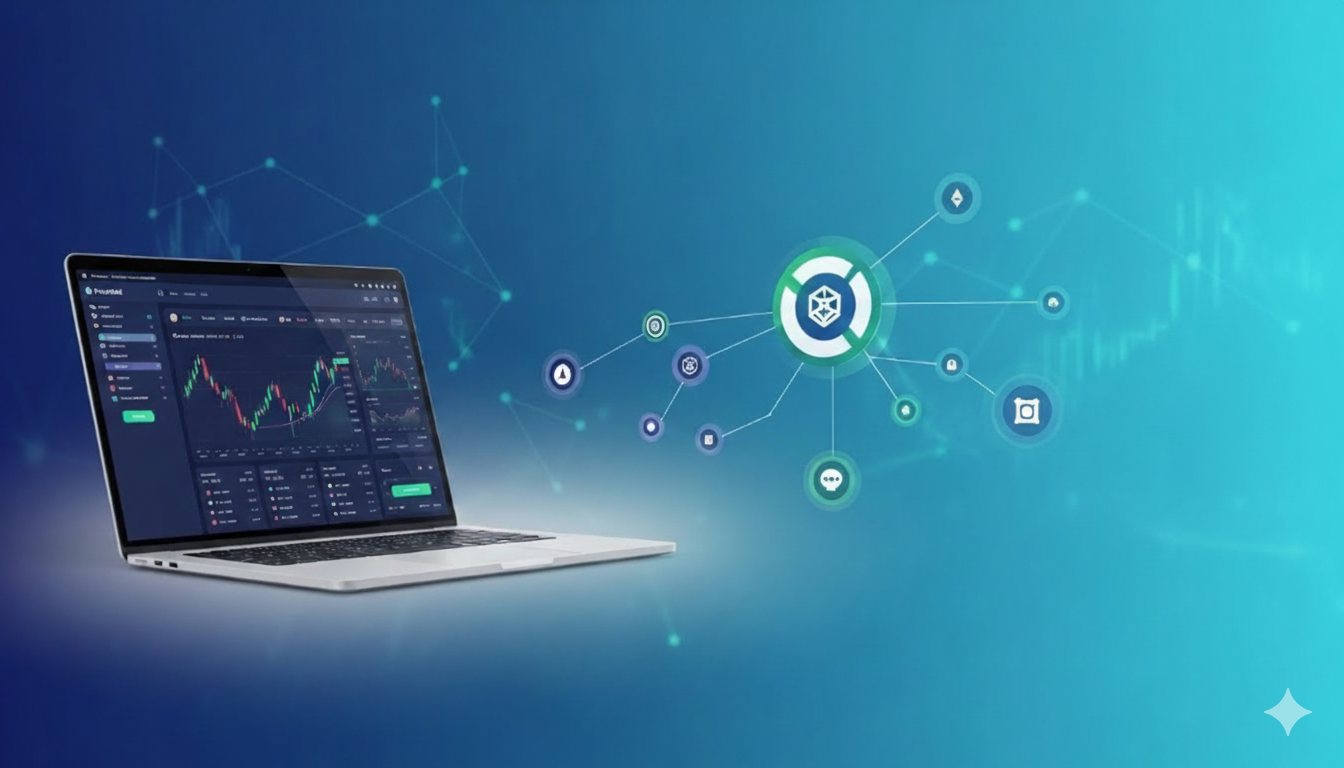
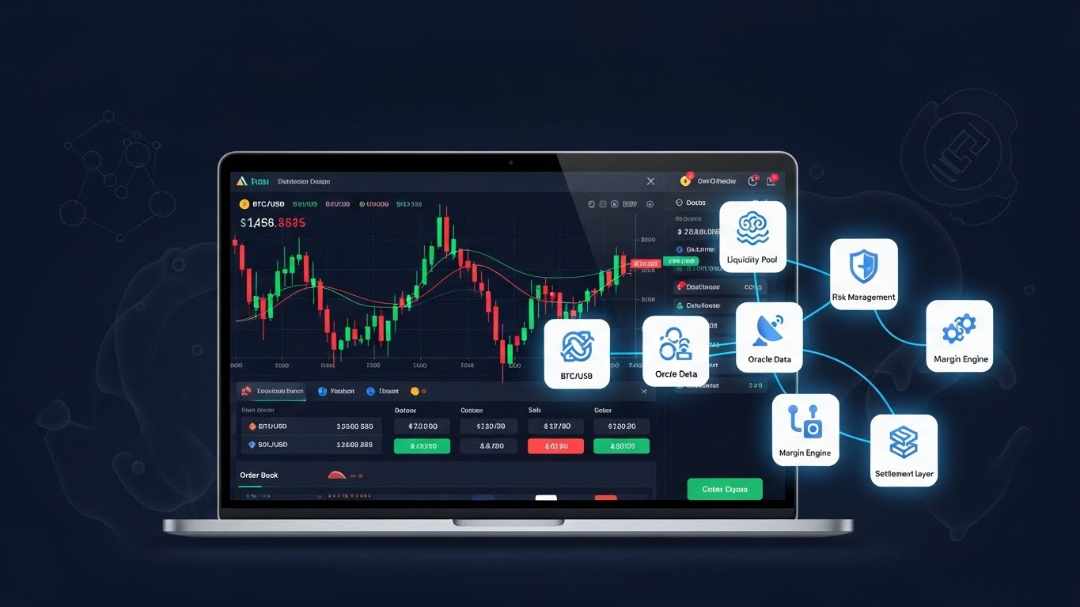
Most perpetual futures trading DEX platforms are built using modular smart contract architectures. Rather than a monolithic system, functionality is separated into components such as margin management, position accounting, liquidation engines, oracle integration, and liquidity pools. This modularity is not only a best practice for security audits but also enables iterative upgrades as market conditions and user expectations evolve.
Another foundational principle is minimizing trust assumptions. Smart contracts replace centralized clearing houses, and protocol rules are enforced algorithmically. This shift requires extreme rigor in contract logic, as any flaw becomes an immutable vulnerability once deployed. As a result, crypto perpetual exchange development increasingly emphasizes formal verification, multi-layer audits, and conservative parameterization during early deployment phases.
Liquidity Architecture and Market Design
Liquidity is the lifeblood of any derivatives exchange, and decentralized platforms must solve this challenge without relying on centralized market makers. The design of liquidity provisioning mechanisms directly impacts spreads, slippage, and overall trader confidence.
Two dominant models have emerged in perpetual DEX development. The first relies on pooled liquidity, where liquidity providers deposit assets into protocol-managed vaults that collectively back trader positions. Profits and losses from traders are socialized across the pool, aligning incentives but also requiring sophisticated risk controls. The second model uses hybrid approaches that combine virtual liquidity with real collateral, allowing the protocol to simulate deeper order books while maintaining capital efficiency.
Regardless of the model, robust pricing mechanisms are essential. Index prices sourced from decentralized oracles ensure that on-chain markets track broader market conditions. Funding rate calculations then adjust trader incentives to keep perpetual contract prices aligned with these indices. Poorly designed funding logic can lead to prolonged price divergence, undermining trader trust and protocol credibility.
Risk Management as a Core Design Pillar
Risk management is not an auxiliary feature in decentralized derivatives; it is the foundation upon which platform survival depends. Without centralized intervention, decentralized perpetual exchange development must embed risk controls directly into protocol logic.
Margin requirements are the first line of defense. Initial and maintenance margins are dynamically adjusted based on asset volatility, liquidity depth, and market stress indicators. Sophisticated platforms implement adaptive margin systems that increase collateral requirements during periods of heightened volatility, reducing the likelihood of cascading liquidations.
Liquidation mechanisms themselves are a defining design principle. Rather than relying on centralized desks, on-chain liquidations are often executed through incentivized keepers or automated bots. These systems must balance speed with fairness, ensuring that positions are closed efficiently without unnecessary value destruction. Partial liquidation models have gained traction, allowing positions to be gradually reduced rather than forcibly closed in full, improving outcomes for traders and liquidity providers alike.
Insurance funds represent another critical layer. These reserves absorb losses that exceed trader collateral, protecting liquidity pools from insolvency. Well-designed perpetual futures trading DEX platforms treat insurance funds as strategic assets, governed transparently and replenished through protocol fees or liquidation penalties.
Oracle Design and Price Integrity
Reliable price feeds are non-negotiable for any derivatives protocol. In decentralized environments, oracle manipulation represents one of the most significant attack vectors. As a result, oracle architecture has become a central concern in perpetual exchange development.
Most platforms use aggregated price feeds sourced from multiple exchanges, combined with time-weighted averages to reduce susceptibility to short-term manipulation. Some protocols further decouple execution prices from oracle prices, using internal pricing curves that smooth abrupt movements. This layered approach enhances resilience during periods of extreme volatility or low liquidity.
Designers must also consider oracle latency. While faster updates improve accuracy, they increase on-chain computation costs. Striking the right balance between responsiveness and efficiency is a hallmark of mature perpetual DEX development services.
Capital Efficiency and Leverage Optimization
One of the primary attractions of perpetual futures trading is leverage. However, offering high leverage in a decentralized setting requires careful calibration. Excessive leverage amplifies risk, while overly conservative limits reduce platform competitiveness.
Modern perpetual futures trading DEX platform development focuses on optimizing capital efficiency through mechanisms such as cross-margining, dynamic leverage caps, and efficient collateral reuse. Cross-margin systems allow traders to offset risk across multiple positions, reducing required collateral while maintaining safety. At the protocol level, this requires complex accounting systems capable of evaluating portfolio-wide risk in real time.
Innovations in virtual liquidity and synthetic exposure have further improved efficiency. By abstracting liquidity depth from actual capital, platforms can offer tighter spreads without locking excessive assets. However, these designs demand robust backstopping mechanisms to ensure solvency under stress scenarios.
Scalability and Performance Considerations
Scalability is a persistent challenge for on-chain derivatives trading. High-frequency trading patterns, rapid position updates, and frequent funding settlements place significant strain on blockchain infrastructure. As a result, scalability considerations shape nearly every aspect of perpetual DEX development.
Layer-2 solutions have emerged as a dominant strategy. By executing trades off-chain while settling state changes on-chain, platforms achieve lower latency and reduced costs without sacrificing security. Optimistic rollups and zero-knowledge rollups each offer trade-offs between throughput, finality, and complexity, influencing protocol design decisions.
Some platforms adopt hybrid architectures, where critical risk logic remains on-chain while less sensitive operations are handled off-chain. This selective decentralization reflects a pragmatic approach to scaling decentralized perpetual exchanges while maintaining trust minimization.
Governance, Transparency, and Protocol Evolution
Decentralization extends beyond infrastructure into governance. Community-driven governance models allow token holders to influence parameters such as fee structures, margin requirements, and supported assets. This participatory approach aligns platform evolution with user interests but also introduces coordination challenges.
Effective governance frameworks prioritize transparency and gradualism. Sudden parameter changes can destabilize markets, so successful protocols employ time-locked proposals, simulation testing, and staged rollouts. In crypto perpetual exchange development, governance is increasingly viewed as an extension of risk management rather than a purely political process.
Transparency further reinforces trust. Open-source codebases, public dashboards, and real-time metrics allow users to assess platform health independently. This openness distinguishes decentralized platforms from opaque centralized competitors and has become a defining principle of credible perpetual DEX development services.
Security-First Engineering and Auditing Practices
Security underpins every design decision in decentralized derivatives. Smart contracts managing leveraged positions represent high-value targets, making rigorous security practices essential.
Leading platforms invest heavily in multi-phase audits, bug bounty programs, and continuous monitoring. Beyond code correctness, economic security is equally important. Stress testing under extreme market scenarios helps identify weaknesses in liquidation logic, insurance fund sizing, and oracle dependencies.
As the industry matures, security is no longer treated as a one-time milestone but as an ongoing process. This mindset is increasingly embedded into perpetual exchange development roadmaps, reflecting the high stakes of on-chain derivatives markets.
Real-World Adoption and Emerging Case Studies
The growth of decentralized perpetual trading volumes highlights the effectiveness of these design principles. Several leading platforms now rival centralized exchanges in daily derivatives volume during peak market activity. Their success underscores how thoughtful architecture, combined with transparent governance and robust risk management, can support large-scale financial activity without intermediaries.
Institutional participation is also increasing. Funds and professional traders are drawn to non-custodial exposure, programmable settlement, and global accessibility. This shift further validates the long-term viability of perpetual futures trading DEX platforms as core financial infrastructure rather than experimental products.
Conclusion
The rise of decentralized perpetual futures trading reflects a broader transformation in financial market design. By embedding trust, transparency, and resilience directly into protocol architecture, decentralized perpetual exchanges challenge long-standing assumptions about how derivatives markets must operate.
The most successful platforms are those that treat design principles not as static checklists but as evolving frameworks. As markets grow more complex and users more sophisticated, continuous refinement in liquidity models, risk controls, scalability solutions, and governance structures will define the next generation of perpetual DEX development.
Ultimately, the core design principles explored here are not merely technical considerations. They represent a philosophical shift toward open, permissionless, and algorithmically governed markets—laying the groundwork for a more resilient and inclusive global derivatives ecosystem.












Write a comment ...