
The financial landscape is undergoing a monumental transformation, driven by the relentless innovation of blockchain technology. At the forefront of this revolution are Decentralized Exchanges (DEXs), platforms that empower users to trade digital assets directly with each other, without the need for a centralized intermediary. For both agile startups and entrenched enterprises, understanding and leveraging Decentralized Exchange Development is no longer optional; it is a strategic imperative to unlock new markets, enhance liquidity, and redefine financial operations.
This comprehensive guide delves into the intricacies of DEX development, exploring its foundational principles, the diverse architectural choices available, the benefits for different organizational scales, and the critical considerations for a successful implementation in the rapidly evolving financial ecosystem of 2026 and beyond.
1. The Core Paradigm Shift: Why Decentralization Matters in Trading
Before diving into the "how," it's crucial to grasp the "why" behind decentralized exchanges. Traditional exchanges (CEXs) operate as custodians, holding users' funds and executing trades on internal ledgers. This model, while familiar, introduces significant risks and limitations:
Counterparty Risk: Users trust the CEX with their assets, making them vulnerable to hacks, insolvency, or malicious actions (e.g., FTX, Mt. Gox).
Single Point of Failure: Centralized servers are attractive targets for cyberattacks.
Lack of Transparency: Internal order books and settlement processes are often opaque, raising concerns about market manipulation.
Censorship and Control: Central entities can freeze accounts or restrict access based on jurisdiction or policy.
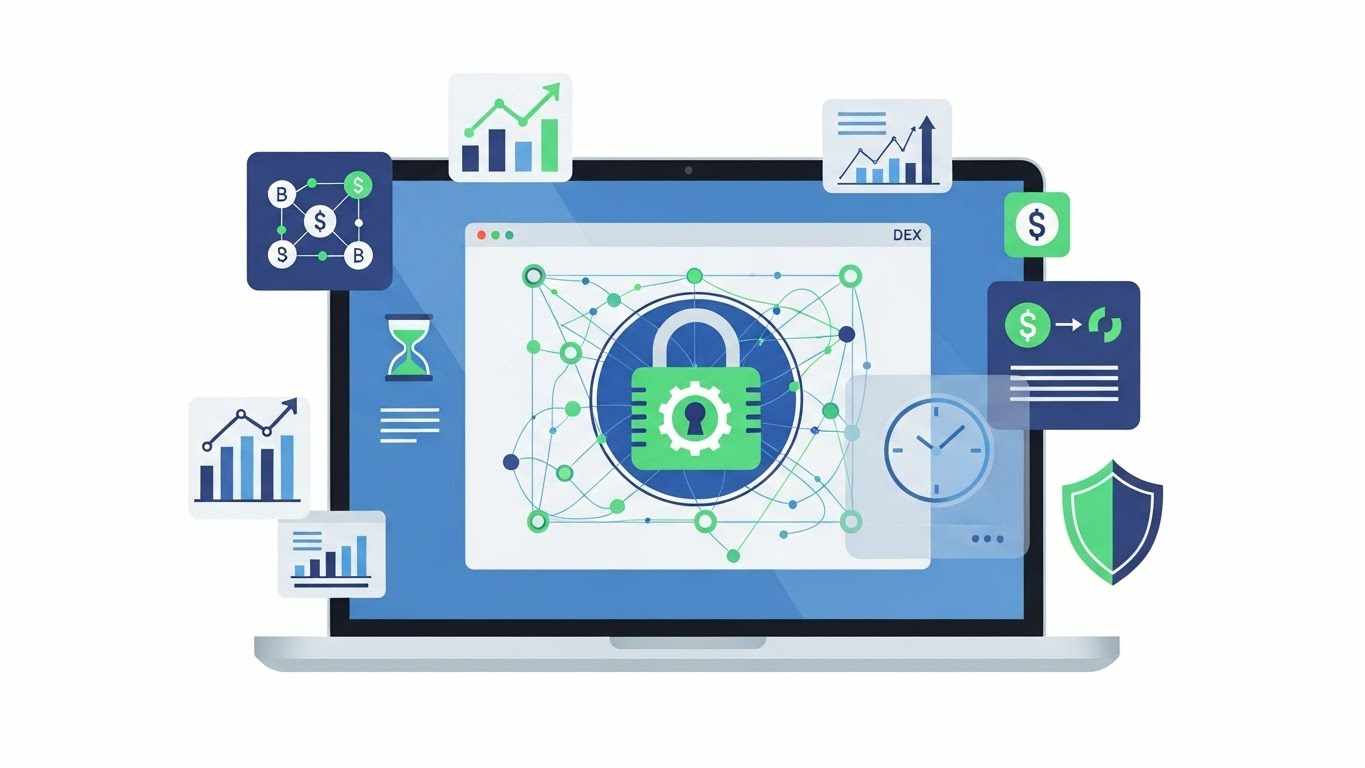
Decentralized Exchange Development directly addresses these issues by adhering to the core principles of blockchain:
Non-Custodial Trading: Users retain full control of their assets in their personal wallets throughout the trading process. Funds are never held by the exchange.
Transparency: All transactions and liquidity provisions are recorded on an immutable public ledger, verifiable by anyone.
Permissionless Access: Anyone with a compatible wallet can access and trade on a DEX, fostering financial inclusivity.
Censorship Resistance: There's no central authority to block trades or freeze funds.
For startups, this translates to building trust instantly without needing years of reputation. For enterprises, it means mitigating systemic risk, enhancing compliance through verifiable on-chain data, and accessing new pools of liquidity.
2. Architectural Archetypes: Choosing the Right DEX Model
The field of Decentralized Exchange Software Development Services has matured significantly, offering diverse architectural models, each with its own trade-offs regarding speed, cost, and complexity. A leading DeFi exchange development company will guide clients through selecting the most appropriate model:
Automated Market Maker (AMM) DEXs
Mechanism: Instead of traditional order books, AMMs rely on liquidity pools—smart contracts holding reserves of two or more tokens. Prices are determined by a mathematical formula (e.g., x * y = k for Uniswap V2) based on the ratio of assets in the pool.
Pros: High liquidity even for illiquid assets, constant availability, passive income for liquidity providers (LPs) through trading fees.
Cons: Impermanent loss (LPs can lose money compared to simply holding assets), potential for higher slippage on large trades.
Evolution: Modern AMMs (e.g., Uniswap V3, Curve V2) have introduced concentrated liquidity, dynamic fees, and capital efficiency improvements, making them viable for both retail and institutional use cases, particularly for stablecoin swaps and concentrated trading pairs.
Example for Startups: Launching a new token with immediate liquidity without needing a market maker.
Example for Enterprises: Creating specialized liquidity pools for internal tokenized assets or offering yield generation to clients.
Order Book DEXs (On-Chain vs. Off-Chain)
Mechanism: Mimics traditional exchanges with bid/ask orders placed in a central order book.
Fully On-Chain Order Books: Every order, cancellation, and trade is a blockchain transaction.
Pros: Maximum decentralization and transparency.
Cons: Very slow and expensive due to high gas fees and latency (e.g., early EtherDelta). Rarely used in 2026 for high-frequency trading.
Off-Chain Order Book with On-Chain Settlement: Orders are managed off-chain (faster, cheaper), but settlements (actual token transfers) occur on-chain.
Pros: Blends CEX-like speed with DEX-like security, lower transaction costs.
Cons: The off-chain component can introduce a minor degree of centralization (e.g., relayers), though funds remain non-custodial.
Example: dYdX (initially Ethereum Layer 2, now a standalone chain on Cosmos SDK), Serum (on Solana, though its ecosystem is evolving).
Suitability: Often preferred by professional traders and enterprises that require high throughput and precise order execution without sacrificing non-custodial security.
Hybrid Models
Mechanism: Combines elements of AMMs and order books, or integrates Layer-2 solutions with traditional DEX designs to optimize for specific needs.
Examples: Some DEXs use AMM pools for general liquidity but allow limit orders that route through the pools or a separate order book.
Trend: The future of DeFi exchange development leans heavily towards hybrid models that leverage Layer-2 scaling solutions (Optimistic Rollups, ZK-Rollups) to achieve high transaction speeds and low costs while maintaining base-layer security.
3. Key Features and Functionalities in 2026
Modern Decentralized Exchange Development goes far beyond basic token swapping. A competitive platform today offers a suite of advanced features to attract and retain users:
Layer-2 Scaling Integration: Essential for handling high transaction volumes with minimal fees. ZK-Rollups (e.g., zkSync, StarkWare) are gaining traction for their superior security and scalability.
Cross-Chain Interoperability: Enabling trades between assets on different blockchains (e.g., Ethereum, Solana, Avalanche) through secure bridges or cross-chain protocols (e.g., LayerZero, Axelar). This is crucial for aggregating liquidity.
Account Abstraction (Smart Wallets): Simplifying user onboarding by abstracting away complex seed phrases and gas fees. Users can pay gas in any token, use social logins, or set up multi-sig recovery, making the experience akin to Web2.
Advanced Order Types: Beyond simple market swaps, including limit orders, stop-loss orders, and potentially even more complex conditional orders.
Liquidity Mining and Yield Farming: Incentivizing users to provide liquidity by distributing governance tokens or additional rewards.
Governance (DAO Model): Allowing token holders to vote on key protocol changes, fee structures, and future developments, fostering a truly decentralized ecosystem.
Analytics and Reporting Tools: Providing users with detailed trade histories, impermanent loss calculators, and yield performance metrics.
Security Audits and Bug Bounty Programs: Non-negotiable for building trust and ensuring the robustness of smart contracts.
Integrations: APIs and SDKs for easy integration with dApps, aggregators, and institutional trading desks.
Fiat On/Off-Ramps: Partnering with third-party providers to allow users to convert fiat currency to crypto and vice-versa directly within the DEX ecosystem, bridging the gap to traditional finance.
4. Decentralized Exchange Development for Startups: Agility and Niche Dominance
For startups, DEX development offers a unique opportunity to disrupt established markets and carve out new ones.
Lower Barrier to Entry: Unlike CEXs that require extensive regulatory approval and capital for infrastructure, a DEX can be launched with a leaner team and more focused resources.
Community Building: The open-source nature of many DEX components fosters strong communities. Startups can leverage this by designing tokenomics that reward early adopters and active participants.
Rapid Iteration: Smart contract development allows for faster deployment of new features and protocol upgrades (via governance).
Niche Markets: Startups can focus on specific asset classes (e.g., NFTs, Real-World Assets, specialized long-tail tokens) or unique trading mechanisms not supported by larger platforms.
Case Study: Consider a startup launching a DEX focused solely on trading tokenized carbon credits. Its development would prioritize robust oracle integrations for real-time data, compliance features for environmental reporting, and potentially specialized AMM curves for less volatile assets.
Key Considerations for Startups:
Smart Contract Security: Absolutely paramount. A single bug can lead to catastrophic loss of funds.
User Experience (UX): Simplified interfaces and account abstraction are critical for mass adoption.
Initial Liquidity Strategy: How will initial liquidity pools be seeded and incentivized?
Marketing and Community Engagement: Building a strong narrative and fostering an active user base.
5. Decentralized Exchange Development for Enterprises: Compliance, Control, and New Revenue Streams
Enterprises, including financial institutions, asset managers, and corporate treasuries, are increasingly exploring DEX technology to:
Mitigate Custodial Risk: Moving away from centralized custodians reduces exposure to insolvency events and systemic risks.
Enhance Transparency and Auditability: On-chain records provide an immutable audit trail, improving regulatory compliance and internal controls.
Access New Capital Pools: Tap into the burgeoning DeFi liquidity, potentially reducing borrowing costs or increasing lending opportunities.
Tokenization of Real-World Assets (RWAs): Decentralized Finance Exchange platforms are ideal for trading tokenized versions of real estate, commodities, private equity, or bonds, opening up 24/7 markets for traditionally illiquid assets.
Case Study: A global investment bank could develop a permissioned DEX (an "Institutional DEX") where only KYC-verified entities can trade tokenized government bonds. This DEX would integrate with existing regulatory frameworks, use robust oracle networks for pricing, and leverage ZK-Rollups for privacy-preserving yet verifiable transactions.
Internal Market Making: Using automated strategies on DEXs for more efficient internal asset management.
New Product Offerings: Providing clients with access to DeFi yield strategies or novel tokenized investment products.
Key Considerations for Enterprises:
Regulatory Compliance: Integrating KYC/AML, sanctions screening, and data reporting tools directly into the DEX's smart contracts or off-chain layers. This is where a specialized DeFi exchange development company with strong compliance expertise is vital.
Data Privacy: Balancing on-chain transparency with the need to protect sensitive client information, potentially using zero-knowledge proofs.
Integration with Existing Systems: Ensuring seamless connectivity with legacy trading platforms, accounting software, and data analytics tools.
Scalability and Performance: Meeting the demanding throughput requirements of institutional trading, often necessitating Layer-2 or application-specific blockchain solutions.
Governance and Control: Designing governance models that align with corporate structures while leveraging decentralized decision-making where appropriate.
Custody Solutions: Implementing robust, institutional-grade non-custodial solutions (e.g., MPC - Multi-Party Computation wallets, hardware security modules) for large asset holdings.
6. The Development Process: From Concept to Deployment
The journey of Decentralized Exchange Development typically involves several critical phases:
Discovery & Strategy:
Defining the target audience, unique value proposition, and business model.
Choosing the blockchain (e.g., Ethereum, Solana, Avalanche, Cosmos SDK, custom Layer 2).
Selecting the DEX architecture (AMM, Order Book, Hybrid).
Regulatory and compliance roadmap.
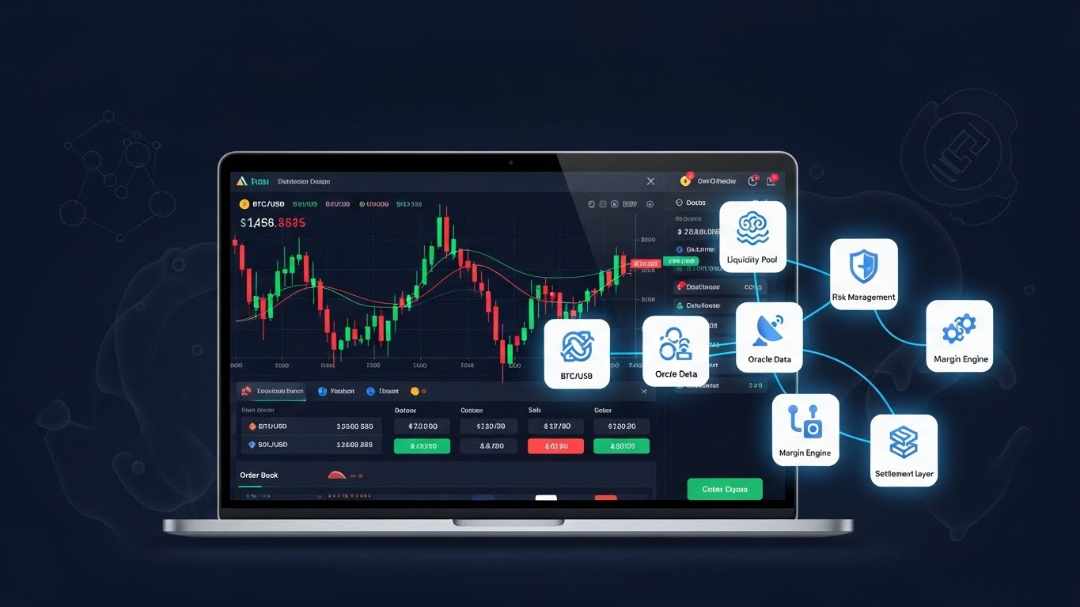
Technical Design & Architecture:
Smart contract design (token logic, liquidity pools, order matching).
Front-end UI/UX wireframing and design.
Backend infrastructure (off-chain services, data storage, API gateways).
Integration points (oracles, bridges, wallets).
Smart Contract Development & Auditing:
Writing secure, optimized smart contracts in languages like Solidity or Rust.
Rigorous internal and external security audits by reputable third parties (e.g., CertiK, ConsenSys Diligence) are non-negotiable.
Implementing bug bounty programs.
Frontend & Backend Development:
Building the user interface (React, Vue.js, Angular) for seamless interaction with smart contracts.
Developing API services, data indexing, and off-chain order matching components for hybrid DEXs.
Testing & Quality Assurance:
Extensive unit, integration, and end-to-end testing across all components.
Stress testing for scalability and performance.
Deployment & Launch:
Deploying smart contracts to the chosen blockchain network.
Launching the front-end application.
Initial liquidity seeding.
Post-Launch Support & Iteration:
Ongoing monitoring, maintenance, and security updates.
Implementing protocol upgrades and new features based on user feedback and market demands.
Managing governance processes.
A reliable Decentralized Exchange Software Development Services provider will guide clients through each of these steps, ensuring a robust, secure, and future-proof platform.
Conclusion
The era of decentralized finance is not just a trend; it is a fundamental evolution of how value is exchanged and managed globally. For startups, Decentralized Exchange Development offers a pathway to rapid innovation and community-driven growth. For enterprises, it presents an unprecedented opportunity to enhance security, achieve unparalleled transparency, and tap into new revenue streams by tokenizing existing assets and participating in a 24/7 global market.
By carefully considering architectural choices, prioritizing robust security, integrating with essential scaling solutions, and building with compliance in mind, organizations of all sizes can successfully navigate this transformative landscape. The future of finance is decentralized, and those who build its infrastructure today will define the next generation of economic power.












Write a comment ...